Governance and Security
Trust nothing by default, and record everything that happens anyway.
Zero secret exfiltration
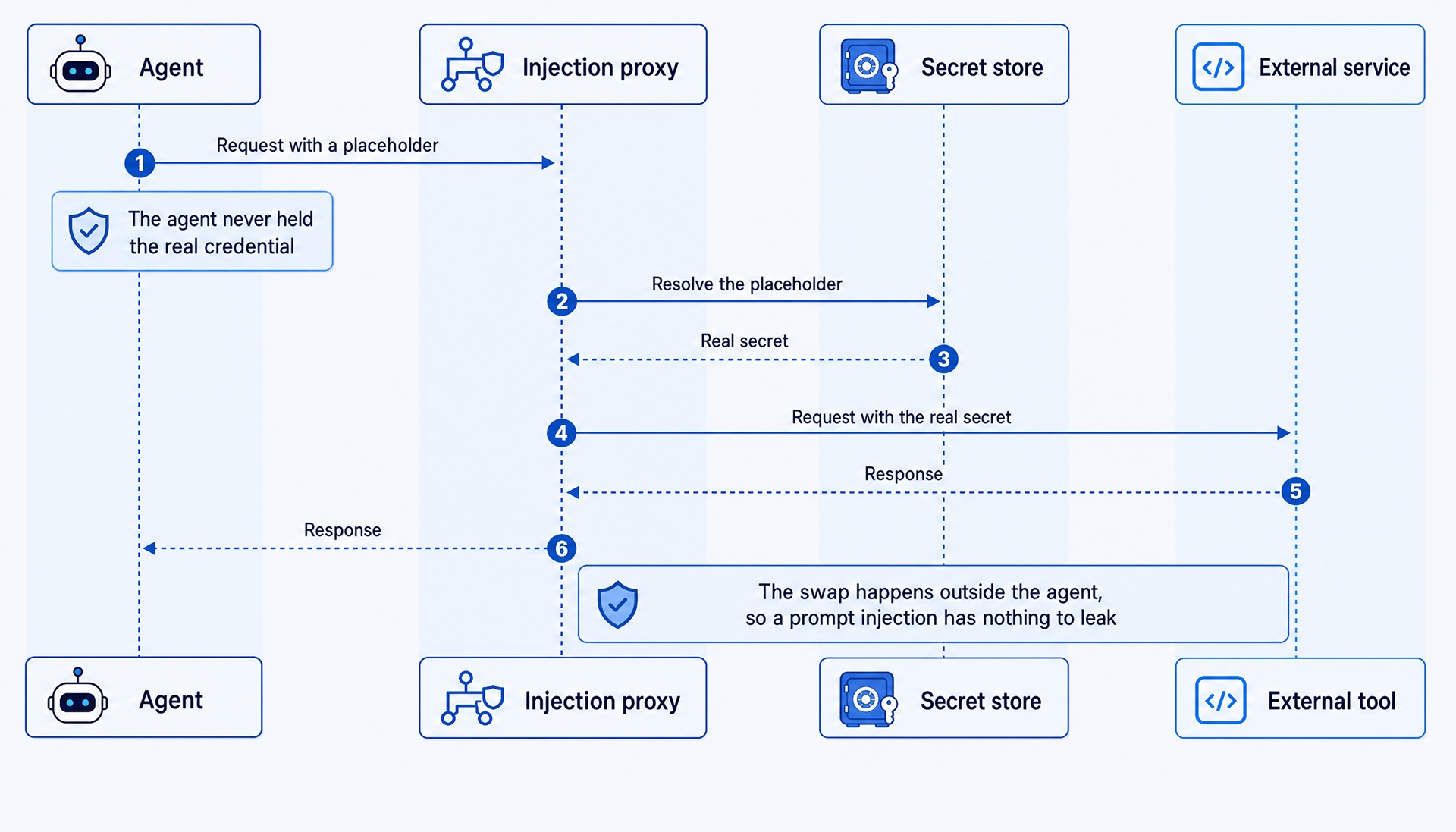
Agents never hold secrets. On credential creation you pass a temporary placeholder that is resolved at runtime, so the model never receives the real value. A prompt injection cannot leak what the agent never received. In the self-hosted build a sidecar proxy intercepts outbound requests and substitutes the reference with a value fetched from the secret store.
Dynamic skill creation
AgentZ can generate a reusable skill out of a workflow you already ran, so the second person to need that job does not rebuild it.
Tool-level permissions and approval gates
Roughly 6% of teams want full automation. The rest want to confirm before an action runs, so the default is to suggest a next step rather than remediate automatically. See Connecting Integrations for the three permission levels.
Workspace-level compute delegation
An Enterprise feature.
Coming soon
This section will cover what an admin delegates, and who receives it.
Audit logs and observability
Every tool call, memory read and model response is recorded with a deterministic replay id. An auditor can replay any run exactly as it happened. Egress is recorded by domain, port and protocol, allowed or blocked, so nothing leaves without a record.